
Once your petition is ready, there's one more decision to make: wait in the regular line, or pay extra for premium processing. With the regular EB-2 NIW processing time now measured in years, it's tempting to pay just to make the waiting stop.
Sometimes that's the right call. Sometimes it buys you less than you think. Here's how to tell the difference.
Educational information, not legal advice. NIWPack is a brand operated by Kooemma Digital Holdings LLC. NIWPack is written by a self-filer, not an attorney, and is not a law firm. Consult a licensed immigration lawyer for advice on your specific facts.
The EB-2 NIW processing time right now
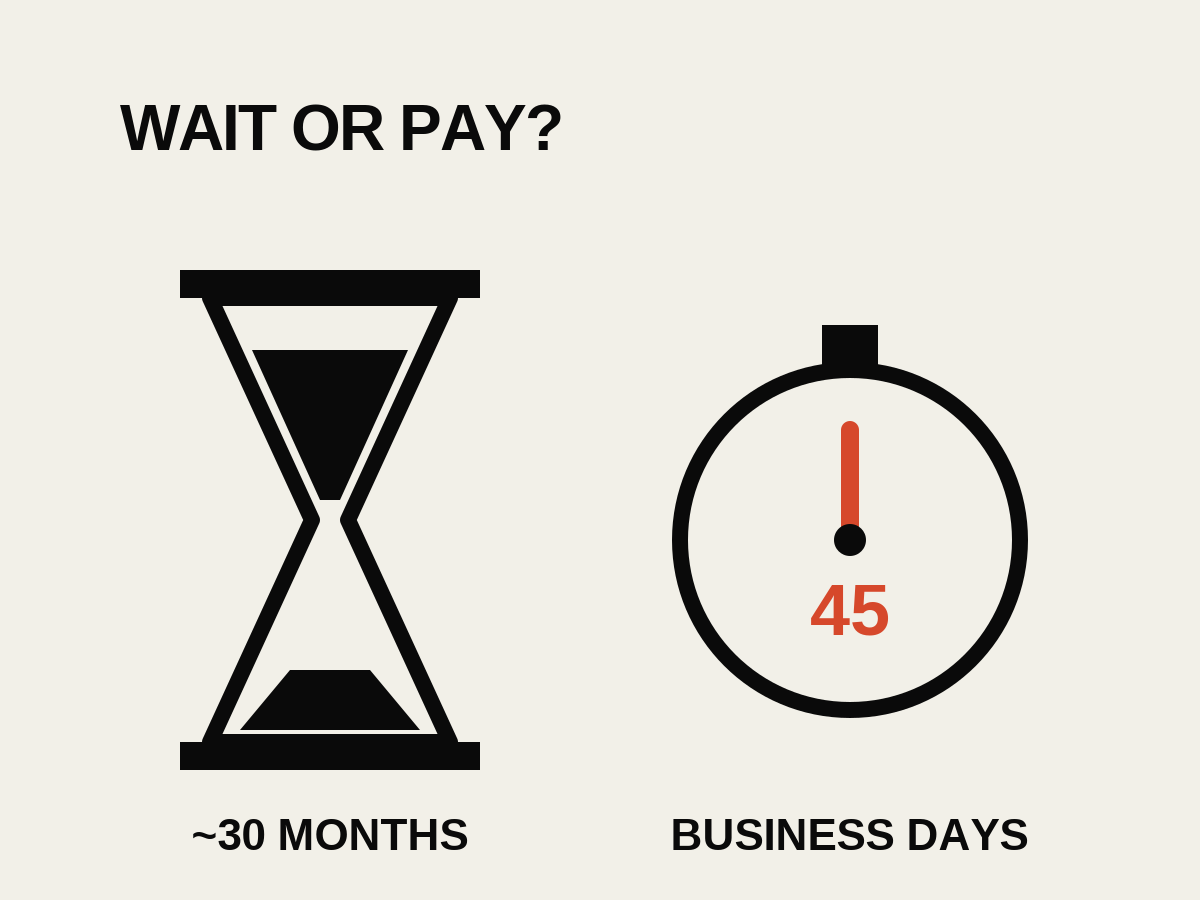
Standard processing. USCIS publishes processing times for the I-140 by category on its processing-times page. In early November 2026, several firms that track it reported the page showing about 30 months for most NIW petitions. That figure moves, so check the tool yourself on the day you decide.
Premium processing. For NIW petitions, USCIS guarantees it will take action within 45 business days of receiving a properly completed Form I-907. If it misses that window, it refunds the premium fee. You can request premium when you file, or upgrade a petition that's already pending.
So the gap is real: roughly two and a half years against roughly two months.
What "action" means (the part people miss)
The 45-day promise is for adjudicative action, not for an approval. Action can be:
- an approval,
- a denial, or
- a request for evidence (RFE).
If you get an RFE, the fast clock stops until you answer. Once USCIS receives your response, it gets a fresh window to act. Premium makes everything faster. It does not make a weak petition stronger, and a thin case can simply get its RFE or denial sooner.
That matters more now than it used to. USCIS can deny a petition that is missing required evidence without sending an RFE first (more in why your petition must be complete on day one). Paying for speed on an unfinished petition is paying to get bad news faster.
What premium processing does not change
Your priority date. It's the day USCIS receives your I-140, whether you pay for premium or not. Premium doesn't move you up the green card line.
The Visa Bulletin wait. After approval, you still wait for your priority date to become current. In the November 2026 Visa Bulletin, the EB-2 Final Action Date for most countries was April 1, 2025, and India and China were years further back. If you file today, that wait will likely be longer than the premium time saved.
Your I-485 or work permit. Premium on the I-140 doesn't speed up the green card application, the EAD, or travel permission.
When premium is usually worth it
- Your status has a deadline. If you're on H-1B and approaching the six-year limit, an approved I-140 can matter for extensions beyond six years. The rules are technical, so confirm your situation with an attorney, but this is the classic case for paying.
- You want to know early. If an RFE is coming, you'd rather get it while your job and status are stable than in two years when life may look different. Fast feedback is worth something.
- You're planning around the result. Changing jobs, moving, starting a company, or deciding whether to leave a sponsored role are all easier with an approval in hand.
- Peace of mind is worth the fee to you. That's a legitimate reason. Just pay for it knowingly.
When you can probably wait
- Your budget is tight. If the fee means cutting corners on the petition itself, spend on the petition first. Strong evidence and good letters do more for you than speed.
- Your status is stable and long. Maybe you're on a green card track with plenty of runway, or you're outside the US with no clock running. Then the standard queue may cost you little.
- You're not sure the case is ready. Finish the petition. You can upgrade to premium later while it's pending, so filing standard now doesn't lock you in.
A simple way to decide
Ask yourself three questions:
- Does a date in my life depend on this approval? If yes, lean premium.
- Would an RFE right now be manageable? If yes, premium gives you that feedback while you can handle it.
- Is my petition complete and specific on all three Dhanasar prongs? If not, fix that before paying for speed.
And whichever way you go, check the current fee on the USCIS Form I-907 page before you send anything. Fees change, and a wrong amount gets a filing rejected.
The bottom line
The standard EB-2 NIW processing time is long, and premium processing really does shorten it. But premium buys speed, not strength. It's worth the money when a deadline, a plan, or your peace of mind depends on an early answer, and only once the petition is as strong as you can make it.
If you're still building that petition, the EB-2 NIW Complete Self-Filer's Pack includes a filing checklist, an evidence index template, and two fully worked example petitions, so whatever you pay for speed goes toward a case that's ready.
Sources: USCIS, "How Do I Request Premium Processing?" (uscis.gov); USCIS processing times for Form I-140 (egov.uscis.gov/processing-times); U.S. Department of State, Visa Bulletin for November 2026.