
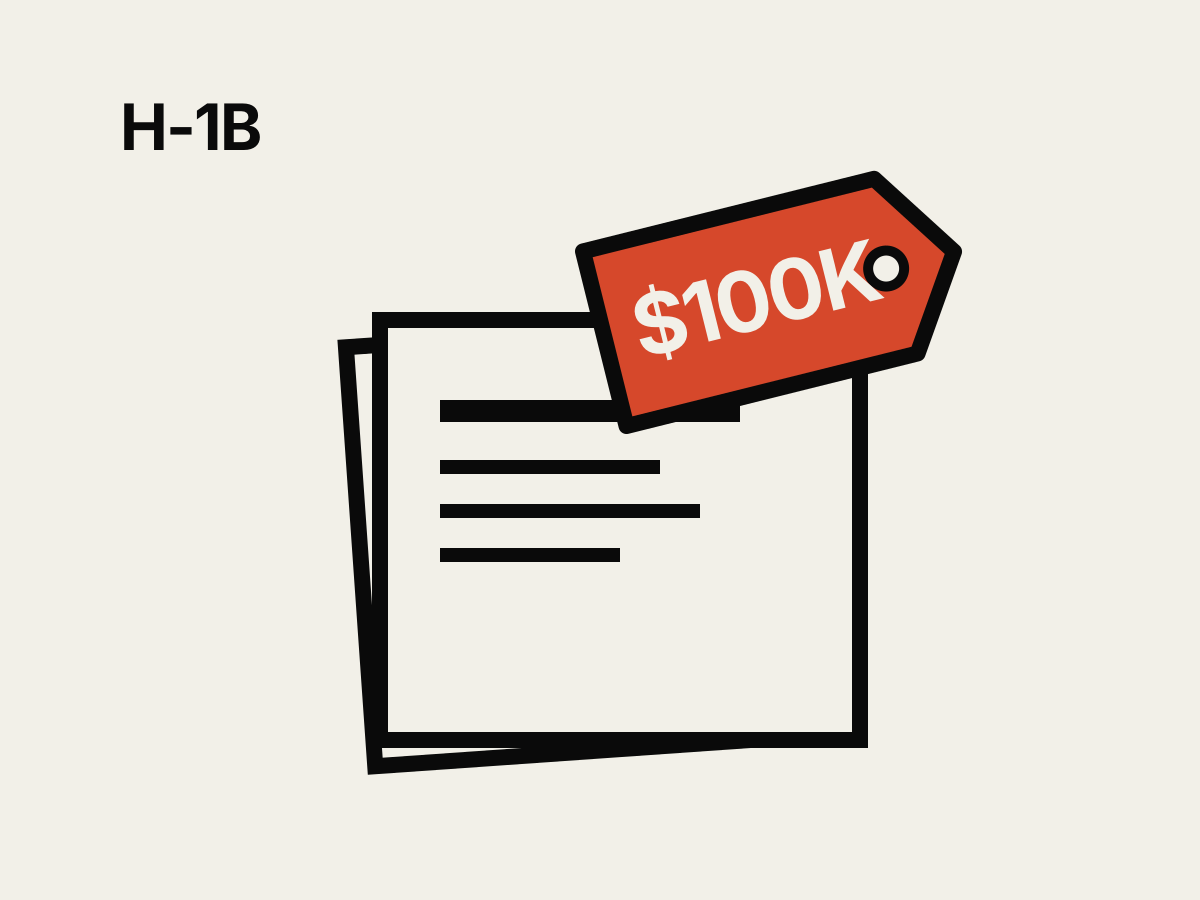
If your future in the US runs through an H-1B, 2026 has been a year of headlines you cannot control. The $100,000 entry restriction has been extended, a new fee rule is pending, and court rulings keep changing what applies. The one part of your immigration path you can control is whether your green card depends on an employer at all.
Educational information, not legal advice. NIWPack is a brand operated by Kooemma Digital Holdings LLC. NIWPack is written by a self-filer, not an attorney, and is not a law firm. Consult a licensed immigration lawyer for advice on your specific facts.
What changed with the H-1B fee in 2026
The timeline matters, so here it is in plain terms, using the official documents:
- September 19, 2025: Proclamation 10973 restricted the entry of certain H-1B workers unless the petition was accompanied by a $100,000 payment. It took effect on September 21, 2025.
- August 25, 2026: DHS published a proposed rule for a separate $103,265 fee on every cap-subject H-1B petition, including the master's cap, on top of all other fees. The comment period closed on September 24, 2026. It is a proposal, not a final rule.
- September 18, 2026: Proclamation 11069 extended the 2025 restriction for another 12 months, to September 21, 2027. The proclamation itself states that the $100,000 payment had been made for over 700 petitions.
At the same time, federal courts have ruled against the policies that put the fee into practice, and those cases are still moving through appeals. Because the litigation is active, the practical status can change from month to month. Check the current USCIS guidance, or ask your employer's immigration counsel, before relying on any single headline.
Why this matters even if you already have an H-1B
The fee targets new petitions, so many current H-1B holders read the news and relax. That is understandable, but it misses the bigger picture. Your status still depends on:
- One employer's willingness to sponsor you, including for extensions and any future change of employer.
- A labor market test (PERM) if your green card goes through the employer route. DOL proposed higher prevailing wage levels for PERM and H-1B in March 2026, which can make that route slower or costlier for employers.
- The lottery and cap rules, which now use a wage-weighted selection process that was in effect for the FY2027 season.
Every one of those is a decision someone else makes. A green card path that you file yourself removes most of them.
How the EB-2 NIW sidesteps the employer problem
The EB-2 National Interest Waiver lets you petition for yourself. If USCIS agrees that waiving the job offer is in the national interest, you need no sponsoring employer and no PERM labor certification. The legal test comes from Matter of Dhanasar (2016) and has three prongs:
- Your proposed endeavor has substantial merit and national importance.
- You are well positioned to advance that endeavor.
- On balance, it would benefit the United States to waive the job offer and labor certification requirements.
You must also qualify for EB-2 itself, through an advanced degree (or a bachelor's plus five years of progressive experience) or exceptional ability.
For an H-1B worker, the appeal is control. Your petition stays yours if you change jobs, and once an I-140 is approved, your priority date generally stays with you as well.
What an NIW does not solve
Be honest with yourself about the limits before you plan around it:
- It is not quick. USCIS reported 96,297 NIW petitions pending at the end of the third quarter of FY2026, and I-140 premium processing for NIW only guarantees action (an approval, denial, or request for evidence) within 45 business days, for a fee of $2,965 on filings made on or after March 1, 2026.
- It is not easy. USCIS's own data shows that roughly half of NIW decisions in FY2026 so far were approvals. A thin petition is a real risk.
- It does not replace your H-1B today. You still need lawful status while the petition and any later green card stage are pending.
- Visa numbers still apply. After approval, you wait for your priority date to become current in the Visa Bulletin, and that wait is very long for people born in India and China.
A practical plan for the next 90 days
If the H-1B news has you thinking about a backup, use this order:
- Check your EB-2 basis. Gather your degree evaluation or proof of five years of progressive experience after your bachelor's.
- Write a one-sentence proposed endeavor. Name the specific work you will do in the US and who benefits beyond your employer. If you cannot write it, you are not ready to gather evidence yet.
- Inventory your evidence by prong. Publications, citations, patents, products in use, funding, awards, leadership, and media coverage. Note what is missing.
- Line up independent recommenders. After the January 2025 policy update, specific letters from people outside your immediate team carry more weight than praise from your manager.
- Decide on timing. If your case is thin, spend the next few months strengthening it rather than filing early and inviting a denial.
The bottom line
You cannot control fee proclamations, court calendars, or a lottery. You can control whether your long-term plan depends on them. For many skilled H-1B professionals, a well-documented, self-petitioned EB-2 NIW is the most direct way to take that control back.
If you decide to build that case yourself, the EB-2 NIW Complete Self-Filer's Pack gives you a sequenced guide, two fully worked example petitions, an editable petition letter template, and an evidence index built around the three Dhanasar prongs. You can preview real excerpts before you buy.